Laos Arrival Card: What Changed in 2025-2026?
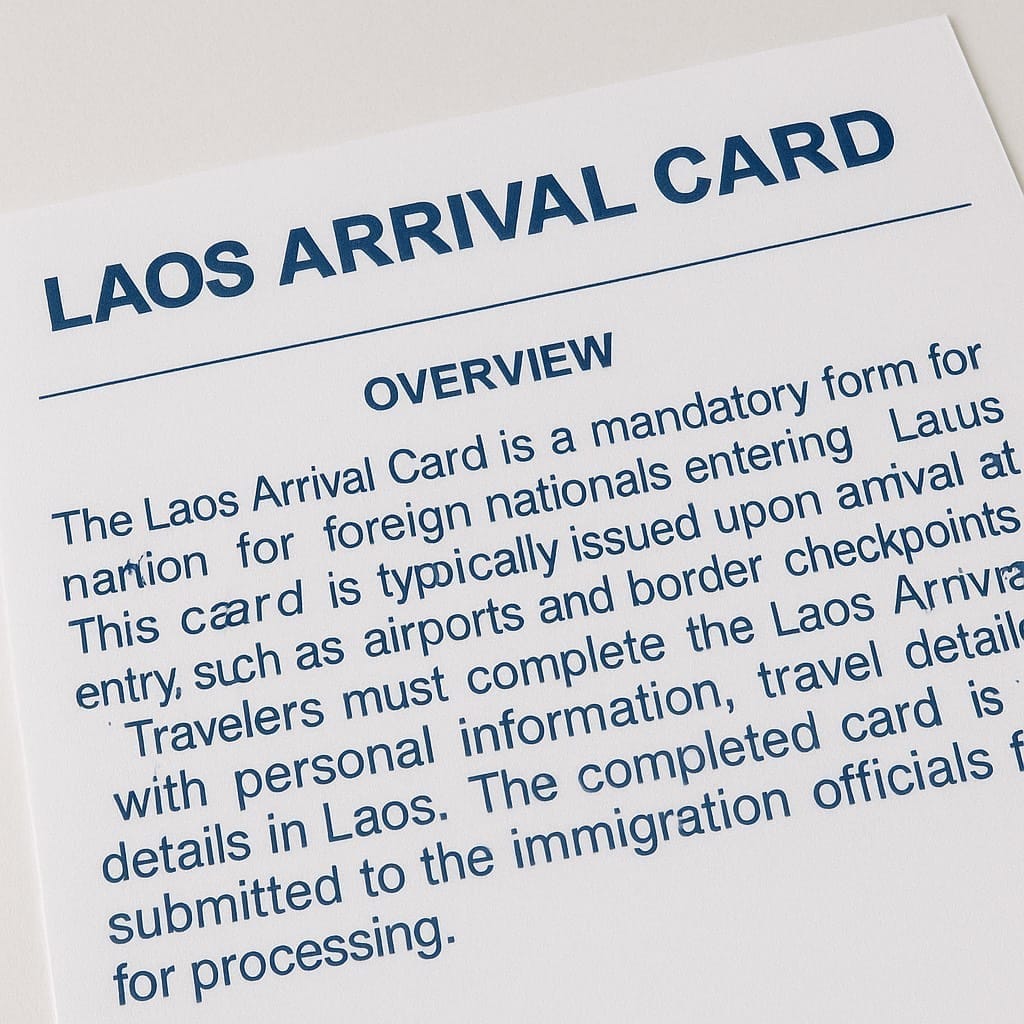
Travelers used to fill a physical arrival card before entering Laos. In 2024, the process became fully digital through the Laos Digital Immigration Form (LDIF).
Many travelers entering Laos still reference the term “arrival card”, but the process is rapidly evolving. This guide explains what the Laos Arrival Card is (or was), how it is being replaced by the digital system, and what you must do if you plan to enter Laos. We detail who needs the arrival card, how it worked, and how the new online system impacts your travel preparation.
What was the Laos Arrival Card?
For many years, foreign visitors arriving in the Lao People’s Democratic Republic (Lao PDR) completed a paper “arrival card” immediately after landing or crossing a land border. The card asked for traveler details such as full name, nationality, passport number, date of arrival, place of stay in Laos, duration of stay, and sometimes onward destination.
The card was then handed to immigration officers and kept as part of the arrival record. At departure, a matching “departure card” was often completed.
This system served its purpose for decades, but growing travel volumes and the need for digitalization led Laos authorities to announce a new system.
Is the Arrival Card Still Required in 2025-2026?
No, it has been replaced by the LDIF. The data is now collected online before you travel.
🔗 Learn how to complete the LDIF here: Laos Immigration Form Guide
🔗 More info: Laos Immigration Form
As of 1 September 2025, the traditional paper arrival card is no longer mandatory at several major entry points. Instead, the new Laos Digital Immigration Form (LDIF) must be completed online.
During a transition period, some checkpoints may still provide paper arrival cards or kiosks for visitors who did not complete the online form, but this should not be relied upon. Travelers are strongly encouraged to complete the digital form before departure.
Therefore, when you encounter references to the “arrival card Laos”, it typically refers to the legacy paper version or the concept of registering your arrival — now carried out via the online system.
Why the Change from Paper to Digital?
The move to digital forms reflects the Lao government’s aims to:
Reduce processing time at immigration counters and prevent bottlenecks.
Improve data accuracy and reduce errors associated with handwritten forms.
Integrate arrival and departure data into a unified electronic registry.
Comply with international travel facilitation standards and improve border security.
For travelers, the advantages include less paperwork, the ability to register from anywhere, and confirmation in advance of arrival — instead of handling forms during the often stressful disembarkation process.
How the Arrival Card Process Worked (Legacy Version)
At the Airport or Land Border

On arrival, visitors picked up a paper card (or a combined arrival/departure card) near immigration counters.
They completed fields: full name, passport number, nationality, flight/vehicle number, place of stay, duration of stay, onward destination.
They handed the card to the immigration officer alongside their passport and visa.
On departure, they often completed the departure segment of the card. The two parts formed part of the official record.
Errors in completion (illegible handwriting, missing details) could lead to delays, questioning, or even refusal of entry/exit.
Why Some Travelers Still Ask About the Arrival Card
Even though the digital system is in place, many websites, travel blogs and forums still refer to the “Laos Arrival Card” as part of the entry process. Travelers planning trips in 2025 should interpret “arrival card” as a broader term: either the legacy paper card (if you travel via small checkpoints) or, more likely, the need to complete your entry registration online.
Current Status of the Arrival Card and Digital Replacement
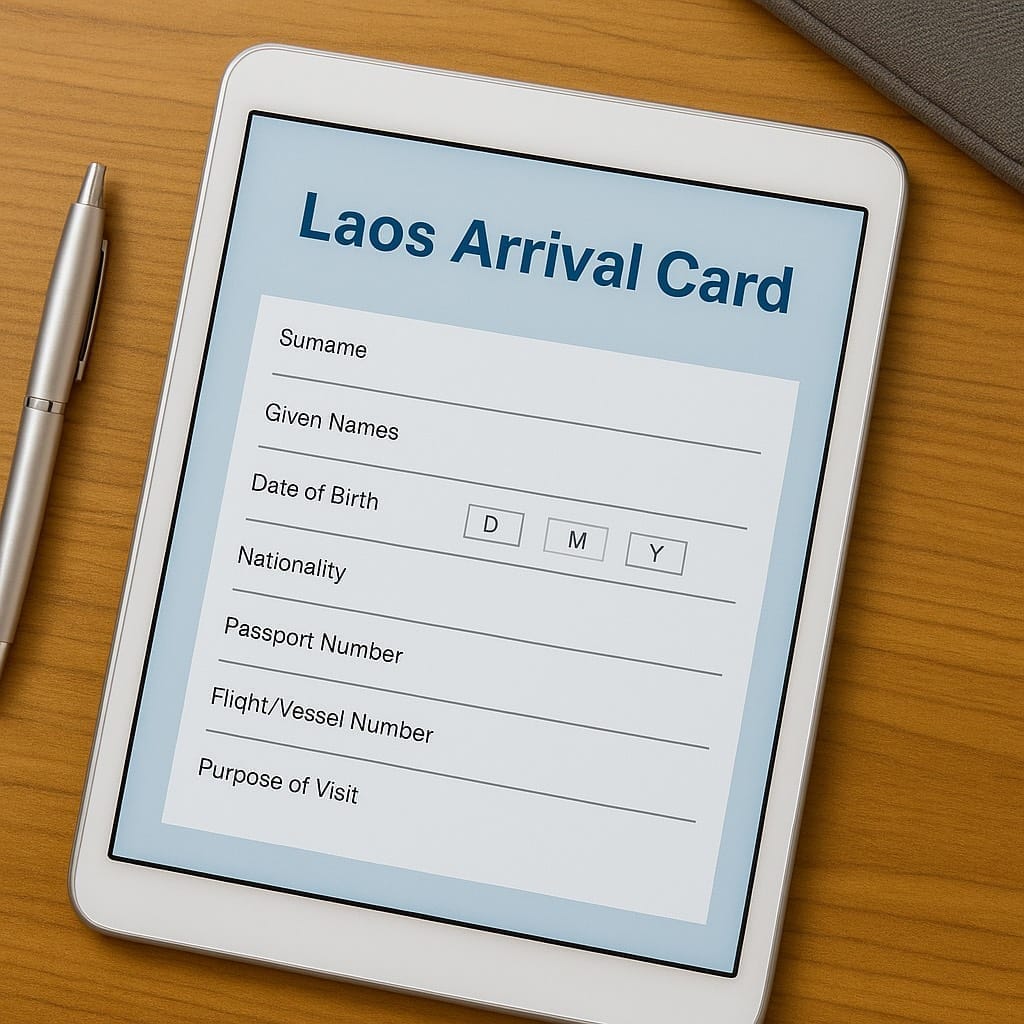
The Department of Immigration of Lao PDR announced that as of 1 September 2025, foreign nationals and stateless persons will need to submit the LDIF online at least three days before arrival or departure.
The rollout began at major entry points: Wattay International Airport (Vientiane), Luang Prabang International Airport, Pakse International Airport, and Lao–Thai Friendship Bridge I (Vientiane – Nong Khai).
Full nationwide deployment across all land border crossings is expected in early 2026.
During this transition, if you are arriving at remote or smaller border posts, it is prudent to check whether the paper arrival card is still used or if an online registration is available.
What to Do When You Hear “Arrival Card” and Are Planning Travel
Interpret the term “arrival card Laos” as meaning the entry registration process — likely digital now.
Visit the official Lao immigration website to see if your entry point requires you to complete the form online. immigration.gov.la
If a paper arrival card is still the norm for your crossing (rare), bring a pen and be ready to fill the card quickly.
Save your filled form or take a photo, and keep any confirmation number — errors or missing cards can slow your entry.
Tips for Smooth Entry Regarding the Arrival Card / Digital Form
Have a valid passport with at least 6 months validity and blank pages — essential no matter what form you use.
Ensure your arrival date, accommodation address and onward destination are correct. Mistakes in the arrival card or its digital equivalent can cause delays.
At airports, crowding during morning arrivals is common — completing online ahead of time saves time.
If you must fill a paper card, have USD or Laotian Kip ready for visa fees (not always the arrival card itself). Bring a 0.5–1 hour margin.
Always check the latest guidance from your carrier or the Lao immigration site: policies change with migratory flows and tech updates.
Conclusion
If you search for “Laos arrival card” you’re seeking to complete the entry registration for Laos. In 2025, that means the legacy paper card is mostly replaced by a digital system — the LDIF. Ensure you check whether your entry point still accepts a paper card or if you must complete your registration online. Mistiming or misunderstanding this requirement can lead to delays or complications at border control. By staying informed and prepared, your arrival in Laos will proceed smoothly and in compliance with the latest immigration procedures.
Trusted LDIF Assistance
evisaLaosOnline.com helps you complete the Laos Immigration Form correctly — saving time and avoiding rejected entries.


Contact
evisalaosonline@gmail.com
© 2025 LaoseVisa.com All rights reserved.
Legal Disclaimer: This website is not affiliated with the Government or its sponsor
You can complete the LDIF Laos yourself on the official website.